
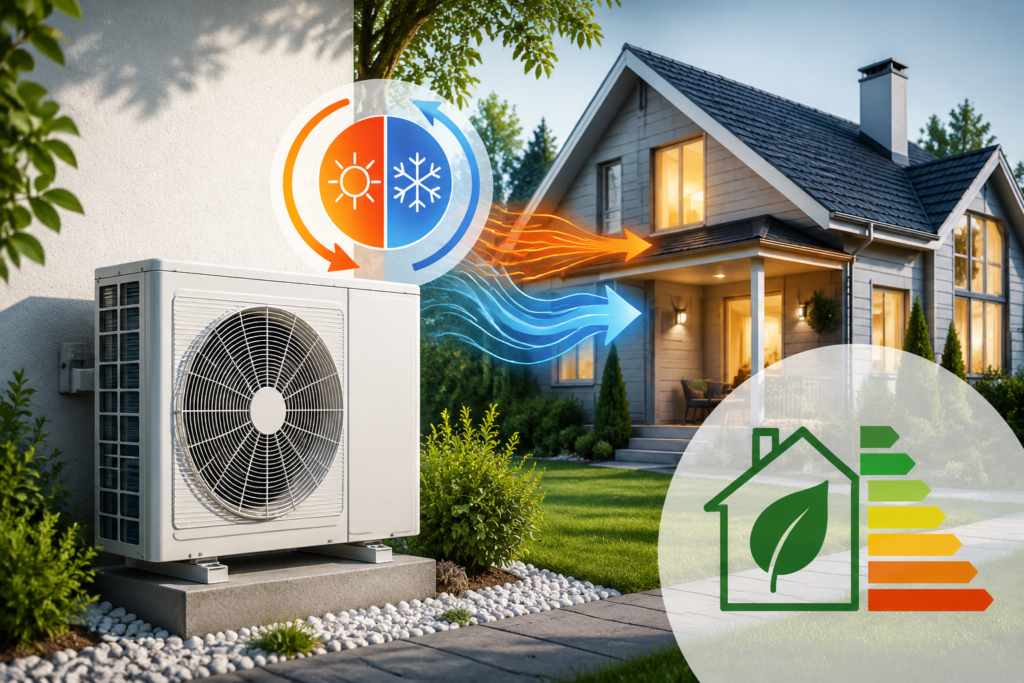
Heating and cooling equipment plays an important role in maintaining comfortable indoor conditions throughout Surrey’s changing seasons. However, evaluating an HVAC system involves more than checking whether the equipment turns on. A qualified HVAC contractor in Surrey may examine equipment condition, airflow, controls, ductwork, ventilation, electrical components, and overall system performance. A detailed assessment can help homeowners better understand current conditions and identify maintenance, repair, or upgrade considerations.
Table of Contents
- Why Is an HVAC System Assessment Important?
- What Does an HVAC Contractor in Surrey Check During an Assessment?
- Airflow and Ductwork Condition
- Thermostat and HVAC Controls
- Electrical and Mechanical Components
- Heat Pump Performance and Installation Considerations
- Ventilation and Indoor Air Quality
- Insulation and the Building Envelope
- Energy Efficiency and System Performance
- How Solar Energy Fits Into Broader Home Energy Planning
- What Should Homeowners Ask After an HVAC Assessment?
- When Should an HVAC Assessment Be Considered?
- Frequently Asked Questions
- What is checked during a residential HVAC assessment?
- Does an HVAC contractor in Surrey mean the equipment needs replacing?
- How often should residential HVAC equipment be inspected?
- Should ductwork be evaluated before installing a heat pump?
- Can insulation problems affect heating and cooling performance?
- Can HVAC and solar upgrades be considered together?
- Frequently Asked Questions
- Conclusion
Why Is an HVAC System Assessment Important?
An HVAC assessment provides a broader picture of how heating, cooling, ventilation, and air distribution are working together. It can identify performance concerns that may not be obvious during everyday operation. Restricted airflow, dirty filters, deteriorating components, thermostat issues, duct leakage, and blocked vents can all affect comfort and system operation.
Identifying these conditions can help homeowners decide whether to schedule routine maintenance, pursue further diagnostics, repair components, or upgrade equipment. Surrey’s climate also creates different comfort requirements throughout the year. Cool, wet winters and warmer summer periods mean residential systems may need to support both heating and cooling demands. Evaluating the complete system can provide useful information for year-round home comfort planning.

What Does an HVAC Contractor in Surrey Check During an Assessment?
The exact process varies according to the home’s equipment, system configuration, age, accessibility, and condition. However, several areas are commonly reviewed during a residential HVAC contractor assessment in Surrey.
Overall Equipment Condition
A technician will typically begin by visually examining accessible heating and cooling components. The inspection may identify corrosion, moisture, loose connections, unusual wear, damaged components, or other visible conditions requiring closer attention.
Equipment age and maintenance history can provide additional context. An older unit does not automatically require replacement. Its operating condition, maintenance needs, repair history, efficiency, and compatibility with the home’s current requirements should all be considered.
Heating and Cooling Performance
A system should be able to respond appropriately when heating or cooling is requested. Technicians may observe how equipment starts, operates, cycles, and distributes conditioned air.
Frequent cycling, unusual sounds, weak airflow, long operating periods, or significant temperature differences between rooms can indicate issues requiring investigation. An HVAC contractor in Surrey can use these observations alongside equipment checks to determine where further testing or maintenance may be appropriate.
Airflow and Ductwork Condition
Airflow is an essential part of many residential heating and cooling systems. Even properly functioning equipment may struggle to maintain consistent indoor temperatures when airflow is restricted or poorly distributed.
Filters, Registers, and Return Air
Air filters are commonly examined because excessive buildup can restrict airflow. The type, size, condition, and installation of the filter may also affect system operation.
Supply registers and return-air openings may be checked for obstruction or airflow concerns. Furniture, household belongings, dust accumulation, or closed registers can sometimes interfere with normal air circulation.
These relatively simple issues are worth identifying before assuming that the primary heating or cooling equipment is responsible for a comfort problem.
Accessible Ductwork
Where accessible, ductwork may be examined for damaged sections, disconnected joints, visible gaps, or other conditions that could interfere with air distribution. Ductwork becomes particularly important when homeowners are considering heat pump installation in Surrey.
Existing ducts should be evaluated to determine whether they can support the airflow requirements of proposed equipment. Assessing the distribution system alongside the heating and cooling equipment creates a more complete picture of overall performance.
Thermostat and HVAC Controls
The thermostat is the primary control point for most residential HVAC systems. Incorrect settings, poor placement, calibration issues, or communication problems can affect comfort and equipment operation. During an assessment, a technician may review temperature settings, operating modes, system response, scheduling, and other available control functions.
Programmable and smart thermostats may provide additional control over household heating and cooling schedules, but compatibility with existing equipment should be confirmed before changes are made. The goal is to ensure that the control system communicates appropriately with the HVAC equipment and supports practical household comfort requirements.
Electrical and Mechanical Components
Modern HVAC systems include electrical and mechanical parts that work together to provide heating, cooling, and air circulation. Depending on the equipment, an assessment may include accessible wiring and electrical connections, motors, fans, coils, drainage components, and other operational parts. Technicians may also look for visible deterioration or conditions requiring additional testing.
These areas should be evaluated by appropriately qualified personnel. HVAC equipment can involve electricity, refrigerants, moving components, and other technical systems that require suitable knowledge and procedures.
Heat Pump Performance and Installation Considerations
Heat pumps can provide both heating and cooling, making them relevant to homeowners who want one system capable of supporting year-round indoor comfort. An assessment can help determine how a heat pump might fit the property’s existing HVAC configuration.
Evaluating the Existing Home
Before proceeding with heat pump installation in Surrey, several property-specific factors may need to be considered. These can include the current heating system, electrical capacity, available installation space, ductwork, insulation, floor area, and household comfort requirements.
Homes with existing forced-air ductwork may have different options from properties that are better suited to ductless equipment. Rather than selecting equipment first, assessing the property helps establish what type of system and configuration may be appropriate.
HVAC Equipment Sizing
Bigger HVAC equipment does not necessarily provide better performance. Equipment capacity should correspond to the heating and cooling requirements of the property. Factors such as building size, insulation, window characteristics, air leakage, orientation, layout, and occupancy can influence heating and cooling loads.
For this reason, planning heat pump installation in Surrey should involve consideration of the building and its energy characteristics rather than relying solely on the capacity of existing equipment.
Ventilation and Indoor Air Quality
Indoor comfort involves more than temperature. Air movement, ventilation, filtration, and moisture conditions can also influence the indoor environment. During a broader assessment, a contractor may look at ventilation conditions and consider whether there are noticeable issues with stale air, excessive humidity, or inadequate air circulation.
Modern homes that are relatively well sealed can require controlled ventilation to exchange indoor and outdoor air efficiently. Depending on the property, heat recovery ventilators or energy recovery ventilators may be among the options considered. The appropriate approach depends on the home’s construction, existing equipment, ventilation needs, and other site-specific factors.
Insulation and the Building Envelope
HVAC equipment works within the larger building envelope. Insulation, windows, doors, and uncontrolled air leakage all influence how easily a property gains or loses heat.
A room that remains cold during winter or excessively warm during summer does not necessarily indicate an HVAC equipment failure. Insufficient insulation, air leakage, window exposure, or distribution problems can also contribute to uneven temperatures.
Reviewing these factors can help distinguish an equipment problem from a broader home-performance concern. For homeowners planning a major heating or cooling upgrade, understanding the condition of the building envelope can also help inform equipment decisions.
Energy Efficiency and System Performance
An HVAC assessment can provide useful information about how different parts of a home’s comfort system interact. A contractor may consider whether maintenance issues, airflow restrictions, controls, insulation, ventilation, or aging components are affecting system operation. Homeowners can then use the findings to prioritize improvements based on actual property conditions.
This approach is more informative than assuming that equipment replacement alone will resolve every comfort or energy concern.
Working with an HVAC contractor in Surrey can also help homeowners understand which findings relate to immediate maintenance and which may be considered as part of longer-term energy planning.
How Solar Energy Fits Into Broader Home Energy Planning
Solar and HVAC systems perform different functions, but both can be considered when homeowners are reviewing household energy use. People researching solar panels in Surrey may want to consider their existing and future electricity consumption. A household that changes its heating or cooling equipment, for example, could experience a different electricity-use pattern.
Solar suitability requires a separate property assessment. Roof orientation, shading, available roof area, roof condition, electrical infrastructure, and household electricity consumption are among the factors that may influence a potential installation.
Homeowners considering solar panels in Surrey should therefore view solar assessment and HVAC evaluation as separate technical processes that can contribute to a broader home-energy plan.
What Should Homeowners Ask After an HVAC Assessment?
A useful assessment should provide understandable information about the condition of the system. Homeowners should feel comfortable asking why a particular issue matters and what options are available.
Useful questions include:
- Which components are currently operating as expected?
- Were any airflow or ductwork concerns identified?
- Does the system require maintenance or additional testing?
- Are there electrical or mechanical concerns requiring attention?
- Is the existing equipment appropriate for the home’s requirements?
- Are there issues outside the HVAC equipment affecting comfort?
- What should be addressed before installing replacement equipment?
- What maintenance could help support ongoing system performance?
Clear answers make it easier to distinguish between necessary work, preventative maintenance, optional improvements, and longer-term upgrades.
When Should an HVAC Assessment Be Considered?
Homeowners do not necessarily need to wait for complete equipment failure before requesting an assessment. Changes such as unusual noises, weak airflow, inconsistent temperatures, frequent cycling, unexplained increases in system use, or difficulty maintaining comfortable conditions can justify an inspection.
An assessment may also be helpful before purchasing replacement equipment or making a significant home-energy upgrade. Consulting an HVAC contractor in Surrey gives homeowners an opportunity to understand existing conditions before making decisions about new equipment.
For those considering heat pump installation in Surrey, this step can identify whether ductwork, electrical capacity, insulation, equipment location, or other property conditions need further attention.
Frequently Asked Questions
What is checked during a residential HVAC assessment?
An assessment may cover equipment condition, system operation, airflow, filters, thermostats, controls, ductwork, ventilation, and accessible electrical or mechanical components. The exact inspection depends on the type and condition of the system.
Does an HVAC contractor in Surrey mean the equipment needs replacing?
No. An HVAC contractor in Surrey identifies current conditions and potential concerns. The findings may indicate routine maintenance, repair, further diagnostic work, efficiency improvements, or eventual equipment replacement.
How often should residential HVAC equipment be inspected?
Inspection and maintenance schedules vary by equipment type, manufacturer recommendations, system usage, and condition. Homeowners should follow the maintenance guidance provided for their specific heating and cooling equipment.
Should ductwork be evaluated before installing a heat pump?
For ducted equipment, reviewing the existing duct system can help identify leakage, airflow restrictions, or distribution concerns. Ductless systems have different installation requirements and should be assessed accordingly.
Can insulation problems affect heating and cooling performance?
Yes. Insufficient insulation and uncontrolled air leakage can increase heat transfer between indoor and outdoor spaces. This may contribute to uneven temperatures and greater heating or cooling demand.
Can HVAC and solar upgrades be considered together?
They can form part of broader household energy planning, although each requires its own technical assessment. Changes to electrically powered heating and cooling equipment may also affect future household electricity consumption.
Conclusion
A residential HVAC contractor in Surrey can provide valuable insight into equipment condition, airflow, ductwork, controls, ventilation, insulation considerations, and overall system operation. Instead of focusing only on whether a furnace, air conditioner, or heat pump turns on, a thorough evaluation considers how multiple components contribute to indoor comfort. Homeowners exploring maintenance, repairs, heat pump installation, or solar panels can use this information to make decisions based on their property’s actual requirements. Greenfoot Energy Solutions serves the Surrey area with HVAC and home-energy services, while homeowners should always consider property conditions, technical requirements, and clearly explained recommendations before proceeding with significant upgrades.
Want to explore local heating, cooling, and home-energy services? View the Surrey location on the map for directions before planning your next system assessment or energy upgrade.